Outdoor movement plays a vital role in childhood development, particularly for children who need structured support with coordination, balance and mobility. Adaptive cycling can help build lower body strength, improve motor planning and encourage forward pedalling skills, all while nurturing confidence and independence in a natural outdoor environment.
For families searching for a specialist children’s tricycle with carer control steering and fixed-wheel stability, finding the right solution can transform cycling from a tiring, unsupported activity into meaningful physical development.
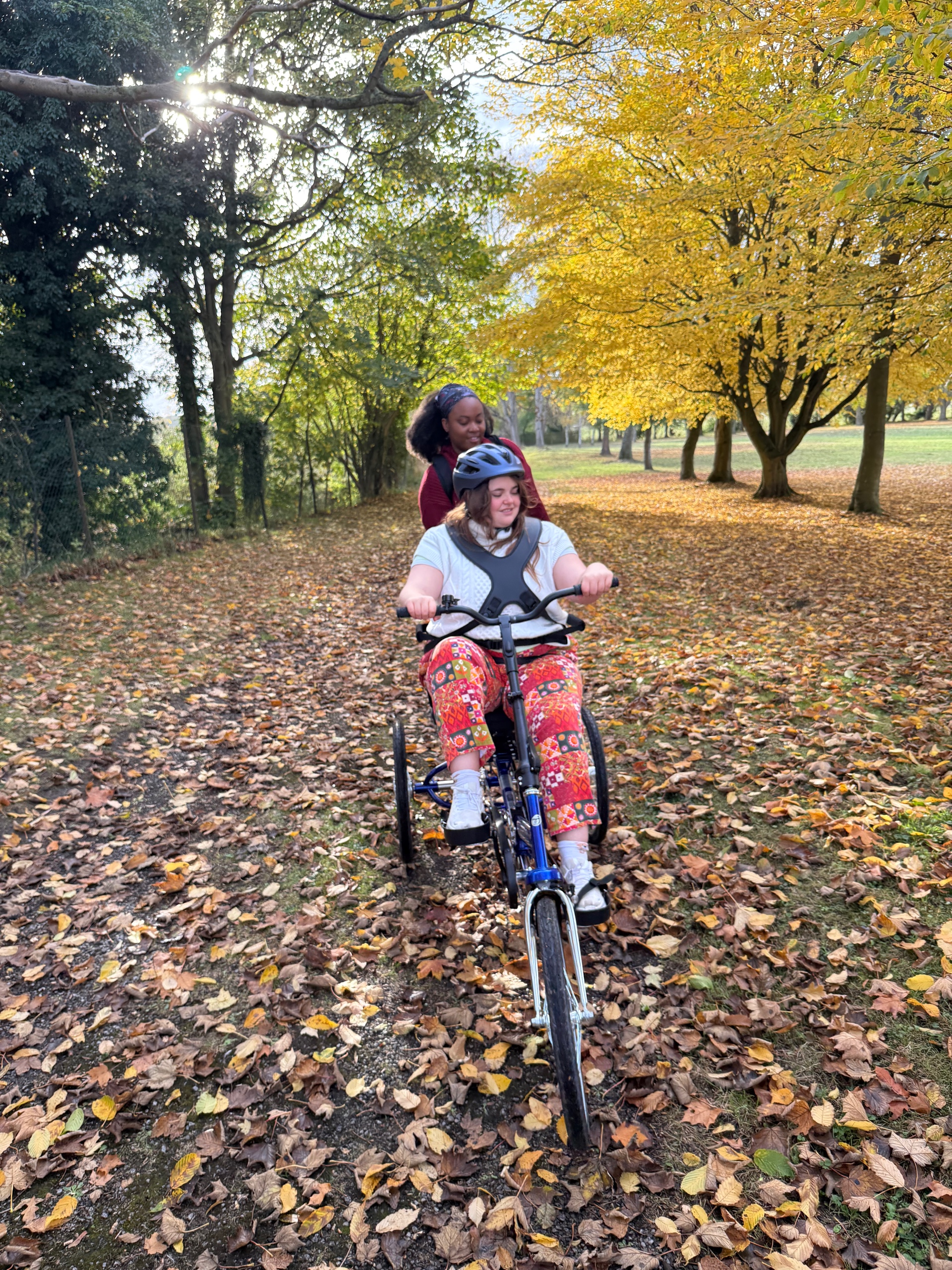
Rider Goal
To learn to pedal forwards independently and enjoy cycling outdoors.
Rider Challenge
Standard bikes were difficult to control and encouraged backwards pedalling, making it hard for Sapphi to build strength and coordination.
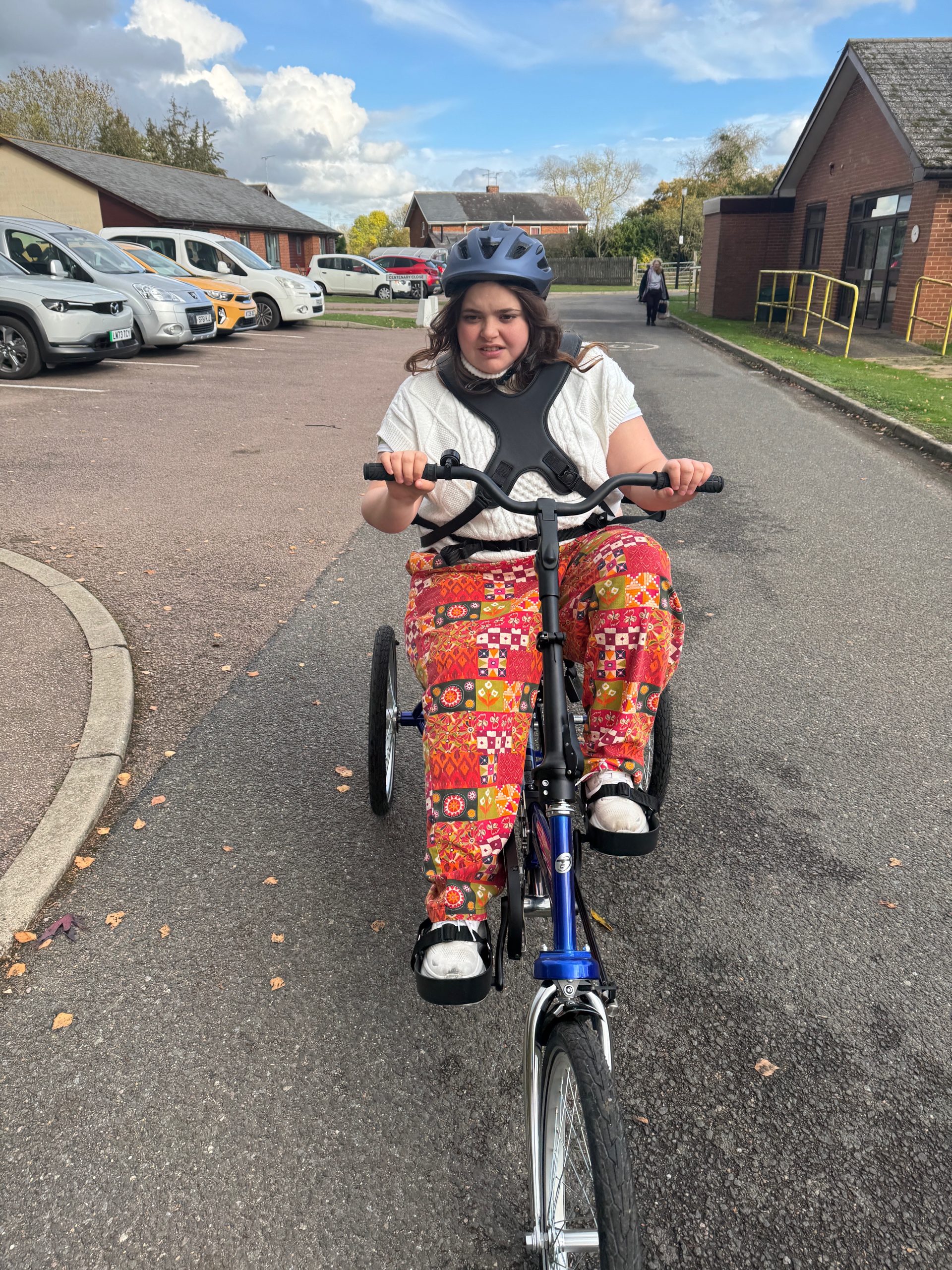
Trike Used
Tomcat Apprentice Bullet adaptive trike with carer control steering.
Outcome
Sapphi was able to pedal confidently straight away, gaining strength, independence and enjoying more time cycling outdoors.
How Outdoor Movement Supports Confidence and Development
For Sapphi, movement is joy. Her family describes how she “loves to swim, cycle, trampoline and go out for meals,” and being active is a big part of her personality. She thrives when she’s outdoors, exploring, and experiencing the world around her. Her family wanted to nurture that enthusiasm in a way that felt safe, meaningful and genuinely beneficial for her development.
When Standard Bikes Don’t Meet a Child’s Needs
Although Sapphi loved the idea of cycling, the reality was far more difficult. She needed a bike that allowed a supporting carer to manage the brakes and steering, but standard bikes simply weren’t designed for her needs.
“With a normal bike it was very tiring and strenuous to control,” her family explained. Even more challenging was pedalling: “Sapphi didn’t understand the need to pedal forwards and as it is easier to pedal backwards carers were moving the bike for her. Therefore, she was not getting the exercise hoped for.”
The family tried attending a local disability cycling group, hoping it would offer a solution. But the bikes “were not well maintained,” and they often ended up using two‑seater models. While Sapphi enjoyed the scenery and the experience of being out on a bike, she still wasn’t able to pedal herself or build the strength, coordination and independence her family knew she was capable of.
They were stuck in a cycle of compromise: she loved cycling, but the equipment available wasn’t helping her progress.
Choosing a Trike That Builds Strength, Confidence and Independence
A simple Google search changed everything. That’s how the family first discovered Tomcat, and they quickly arranged an assessment. From the moment the assessor arrived, they felt reassured. “Kevin was prompt, efficient, very respectful and experienced. He knew exactly what Sapphi needed.”
For the first time, they were shown a trike built around Sapphi’s abilities, not her limitations. The features that mattered most were clear: “Carer control, steering control for carers and fixed wheels.” These gave her the structure she needed to learn to pedal forwards, while giving carers the confidence to support her safely and comfortably.
It wasn’t just a product; it was a turning point.
How Adaptive Trikes Support Physical Development
Sapphi’s first ride on her Tomcat Apprentice Bullet was unforgettable. “A dream,” her family said. “She rode off straight away and thoroughly enjoyed herself.” After years of struggling with unsuitable equipment, she finally had a cycle she could use independently, confidently and joyfully.
Since then, the changes have been significant. Her family has seen:
- “Increased confidence”
- “Improved strength or mobility”
- “More outdoor time”
The trike has become part of her routine, her wellbeing and her happiness. It has opened the door to more family outings, more exercise, and more moments where she can shine. What began as a search for a better bike has become a pathway to independence, strength and pure enjoyment.