Learning to ride a bike is one of those milestones that many families look forward to. But for some children, it never quite clicks. Whether it’s due to a physical or neurological condition, a developmental difference, or simply that standard two-wheelers aren’t the right fit, the struggle to balance on a conventional bike can be frustrating for both child and parent.
The good news is that a two-wheeled bike is far from the only option. Cycling is more accessible than many people realise, and there are several alternatives worth knowing about.
Why balancing on a standard bike can be difficult
Riding a two-wheeled bike requires a complex combination of core strength, coordination, spatial awareness, and proprioception. For children with conditions such as cerebral palsy, hypermobility, autism, ADHD, Down’s syndrome, or acquired brain injuries, any one of these can present a significant barrier. Even for children without a diagnosis, some simply need more time, a different approach, or a different type of bike entirely.
It’s worth knowing that difficulty balancing on a standard bike is not a reflection of effort or potential. It often just means the equipment needs to match the child.
Three-wheeled trikes
For children who struggle with balance, a trike is often the most straightforward solution. With three points of contact on the ground, trikes remove the balancing challenge entirely and allow the rider to focus on pedalling and steering. This can make a huge difference to confidence, especially for children who have had repeated negative experiences trying to ride a standard bike.
Trikes come in a wide range of sizes and configurations to suit different ages, body types, and support needs. Some are designed for independent riding, while others can be adapted with additional support features such as trunk supports, footplate straps, and handlebar grips tailored to the rider.
Adaptive trikes
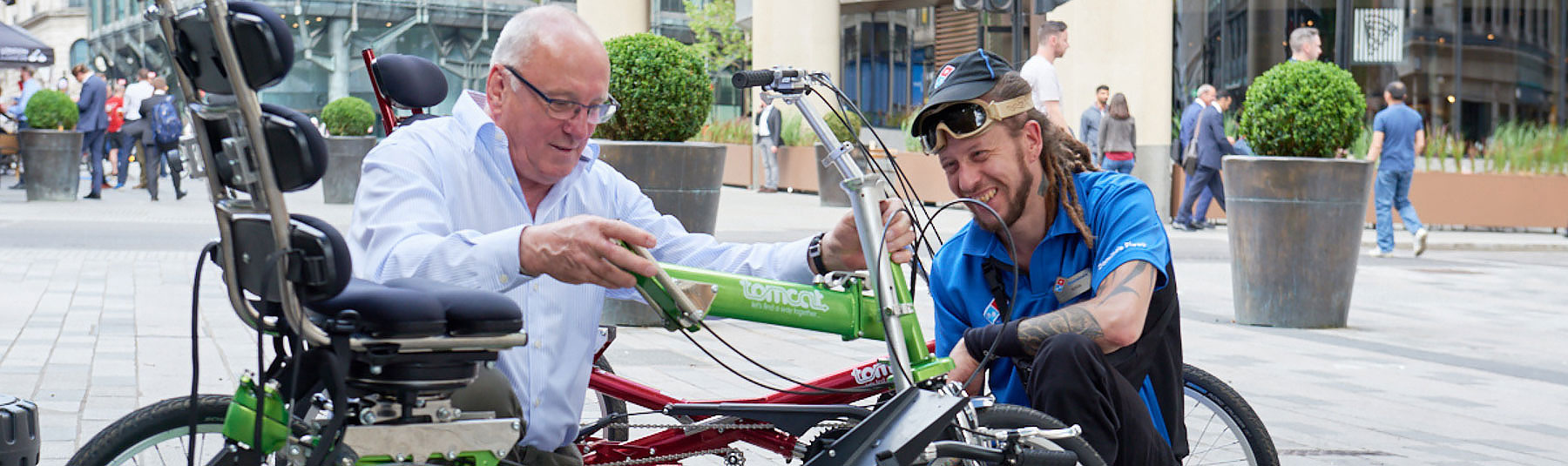
Beyond standard trikes, adaptive trikes are purpose-built for riders with more complex physical needs. These are designed with postural support and individual fit in mind, and can be customised to a significant degree. Features might include supportive seating systems, lateral trunk supports, specialist pedals, and hand-powered options for children who have limited or no use of their legs.
Adaptive trikes are often recommended and sometimes funded through healthcare pathways, and many families access them with the support of an occupational therapist or physiotherapist. A specialist assessment can help identify which features are most appropriate for a particular child.
Where to start
If you’re not sure which direction to go, a good first step is to speak with your child’s occupational therapist or physiotherapist if they have one. They can advise on postural support needs and, in some cases, support a funding application for specialist equipment.
At Tomcat, we work with families, therapists, and distributors across the UK to find the right trike for each individual rider. Our range includes options for a wide variety of needs, and we’re used to helping people navigate the process from first enquiry through to getting out on the road. If you’d like to talk through what might work for your child, you can get in touch with us directly or find your nearest Tomcat distributor on our website.
Cycling doesn’t have to look a particular way to be worthwhile. With the right equipment, most children can access the joy, freedom, and physical benefits that come with it, on their own terms, and at their own pace.