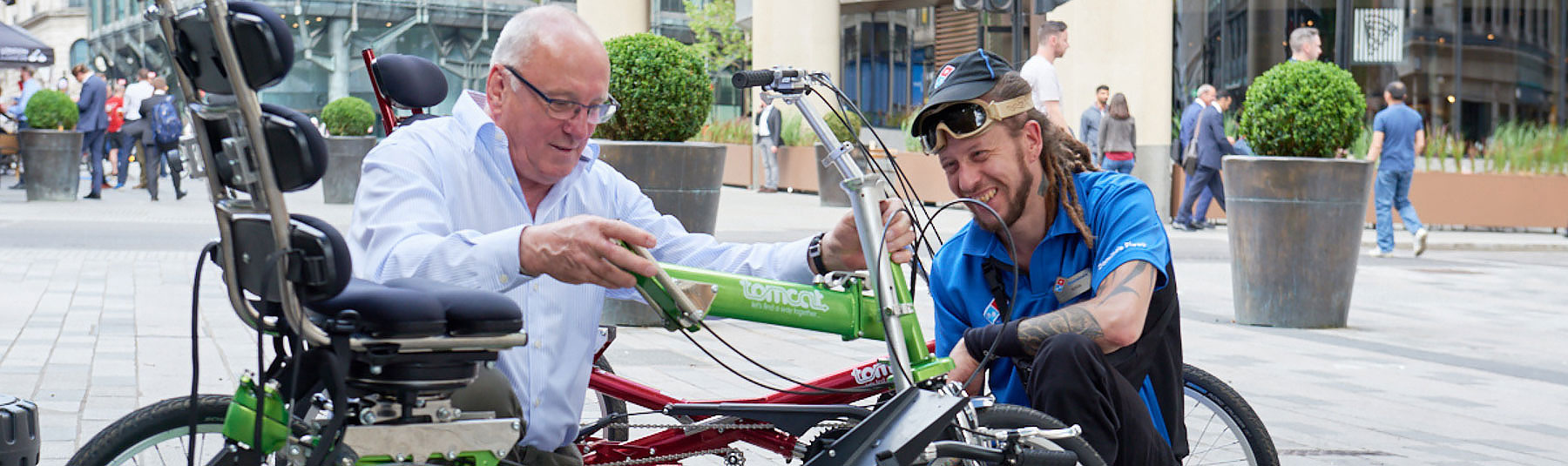
If you’re exploring special needs trikes for the first time, the range of features and options can feel like a lot to take in. This guide walks through the key areas that define a well-designed adaptive tricycle, what each feature does, and why it matters.
Seating
The seat is the foundation of everything. If a rider isn’t positioned correctly, the rest of the trike can’t do its job, and riding quickly becomes uncomfortable or unsafe.
Because every rider is different, there’s no single seating solution that works for everyone. The features below reflect the range of what’s possible, from basic comfort through to full postural support.
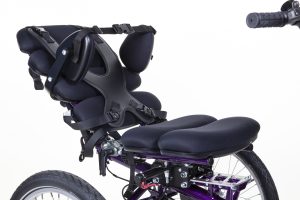
The angle of the backrest can be adjusted to support posture, improve comfort during longer rides, and make the trike easier to store or transport flat.
The rider sits, passes a leg over, then locks securely into position, making mounting and dismounting safe and straightforward without the need for lifting.
Sliding Seat and Leg Length Adjust
The seat moves forward and back along the frame to ensure the rider’s feet reach the pedals comfortably, with room to accommodate growth over time.
The entire seat can be detached from the frame in seconds, useful for compact storage, easy transport, or switching between riders.
Security Backrest
Width and height adjustable with a security buckle and strap, giving a reliable and adaptable fit as the rider’s needs change.
Fully Upholstered Backrest
Deep cushioned support with height and tilt adjustment, ideal for riders who need comfort on longer rides or have sensitivity to pressure.
Lateral Arms and Lateral Pads
Padded side supports that keep the rider correctly positioned throughout. Lateral arms adjust by width, while lateral pads offer independent three-way adjustment with a waist strap for a more precise fit.
4 Point Safety Harness
Keeps the rider securely in the seat, providing peace of mind for carers without restricting the riding experience.
Other available options include a sculpted headrest, headrest with wings, quick release pommels, two point straps, and a recoil safety lap belt, each addressing specific postural or comfort needs depending on the rider and model.
Steering & Braking
For many riders, steering and braking are where the most important adaptations happen. The right setup depends on the rider’s cognitive awareness, physical ability and how much independence they’re ready for, and most Tomcat trikes can be configured to grow alongside them.
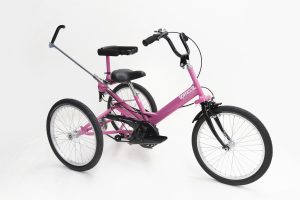
Our original signature innovation, a rear steering arm that gives a carer full control of steering, braking, speed and parking from behind the trike, while the rider pedals and enjoys the experience of moving freely.
Carer Braking
A carer-operated strap brake with park brake, for situations where the rider steers independently but a carer needs to manage speed and stopping.
Self-Centring Steering
Positive and predictable steering that naturally returns to centre, making the trike easier and more intuitive to control for riders who are building confidence.
Easy Operate Park Brake
A simple, reliable brake that keeps the trike safely stationary during mounting, dismounting or any time the trike needs to stay put.
Loop Handlebars
Offer a variety of grip positions and reach options, particularly useful for riders with limited hand strength or coordination.
Other steering options include a fixed handlebar clamp for riders who benefit from reduced handlebar movement, and the Tom Riley straight handlebar for a more traditional riding position.
Pedalling
Pedalling features are about making sure every rider can participate in the act of cycling in a way that works for their body, whether that means pedalling independently, being assisted, or somewhere in between.
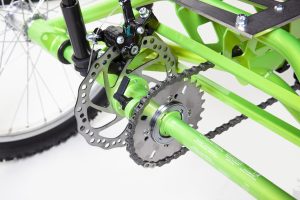
Switches between fixed drive, where the pedals move with the wheels so the rider is always engaged, and freewheel, which allows the trike to be pushed or towed without the pedals turning. This is particularly useful for riders with complex medical needs, or for longer outings where a rest is needed.
A throttle-controlled motor capped at walking pace, allowing riders with limited strength or stamina to cover more ground, and giving carers an easier experience on hilly terrain or longer routes.
Self-Levelling Pedals
Always return to the correct position, making it easier for a rider to place their foot without having to search for the pedal.
Footshoes and Leg Supports
Keep feet and legs correctly aligned during pedalling, supporting riders who need help maintaining the right position through the full pedal stroke.
Transport
A special needs trike is only as useful as it is practical to get out of the house. Tomcat trikes are designed with real family life in mind, because the easier a trike is to transport and store, the more it gets used.
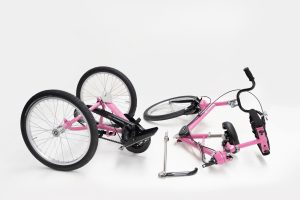
The frame splits into two in seconds without tools, making it straightforward to fit into a family car and just as quick to reassemble when you arrive.
Removable Quick Release Wheels
Wheels can be removed quickly for even more compact storage or transport, without any specialist equipment.
Available on select models, the folding frame reduces the trike to a compact form for easy storage at home or in the boot of a car.
Can be taken off when not needed, reducing bulk during transport or storage.
Every rider is different
What makes a Tomcat trike work isn’t any single feature. It’s the way everything comes together around an individual rider. Each trike is built following a personal assessment, so the combination of seating, steering, pedalling and transport features is always specific to the person who’ll be riding it.
If you’d like to find out more, request a free assessment