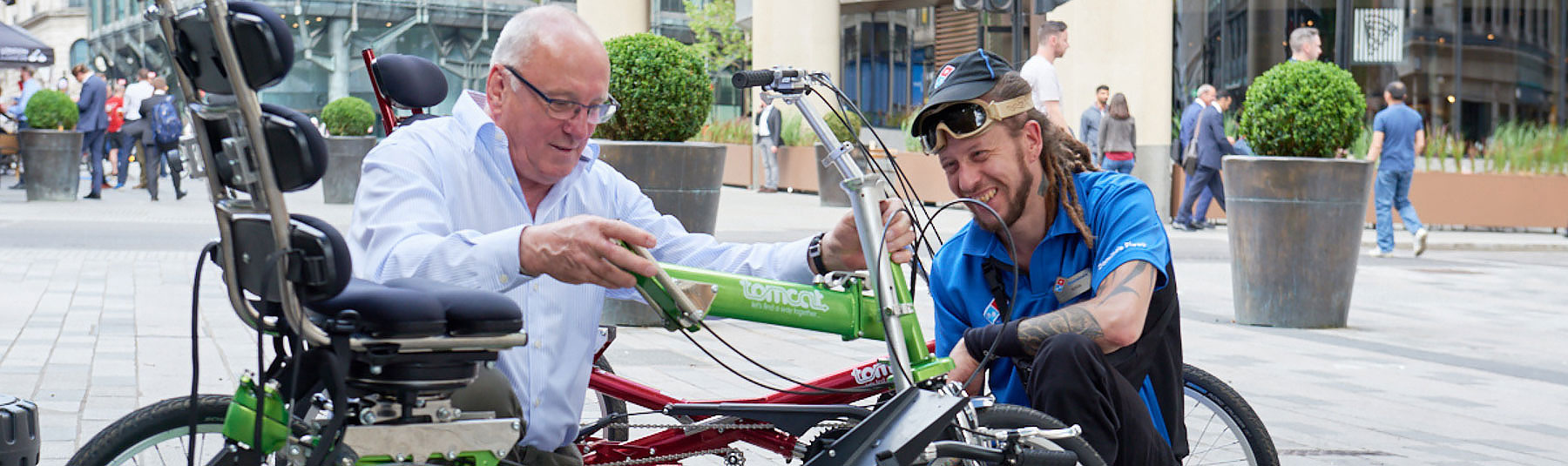
Whether you’ve been referred for a trike assessment or found your way here through your own research, you might not know quite what to expect. That’s completely normal. For most families, it’s the first time they’ve been through this kind of process, and the word “assessment” can feel a little clinical or formal. In practice, it’s a relaxed, practical session focused entirely on your child. Tomcat assessments are also completely free and come with no obligation, so there’s nothing to lose by taking that first step.
Here’s what usually happens.
It takes place wherever works for you
One of the first things to know is that a Tomcat assessment comes to you. Whether that’s your home, a school, a therapy setting, or somewhere else entirely, the session happens in a place that suits your family. If it’s easier, you’re also welcome to visit us at our Gloucestershire showroom. Whatever works best, our aim is to make sure your family feels as comfortable as possible throughout the process.
Who will be there
That’s entirely up to you. If you’d like your child’s occupational therapist or physiotherapist present, we’re more than happy to work alongside them. If you’d prefer it to be just you and your family, that’s absolutely fine too.
The one thing we do ask is that your child is there on the day. We’ll observe how they move and interact with our demo equipment, get a sense of what provisions might be needed, and talk with you about what you want for your child and your family. Everything gathered during the assessment feeds directly into building a bespoke trike that supports your child in the right way for them.
What the assessment looks at
The Tomcat specialist will take time to understand your child as an individual, not just their diagnosis. They’ll look at posture and seating position, how your child moves and where they need support, and what they enjoy and how they engage.
You’ll have the chance to trial a range of products that your assessor considers suitable for your child, including some of the innovations that make Tomcat trikes unique. Your assessor will walk you through each one, explaining the benefits and how they can improve your child’s riding experience.
Because every Tomcat trike is built individually for its rider, the assessment is how we make sure the finished trike fits your child properly, in every sense.
You’ll have the chance to ask questions
The assessment is as much a conversation as it is an evaluation. If you have questions about the trike itself, the build process, funding options, or anything else, this is a good time to ask. The Tomcat team is used to supporting families who are new to this, and there are no silly questions.
What happens next
At the end of your appointment, your assessor will talk you through their recommendations. If there are a number of options, they’ll clearly outline the pros and cons of each so you can make an informed decision.
The assessor will then bring their technical notes back to our office, where they’ll be reviewed by one of our technicians and converted into a quotation. This review makes sure the proposed solution and any special provisions are workable, and any queries will be resolved with you before the specification is finalised. Your quotation will fully set out the proposed trike and provide a final costing, including setup, training, and delivery.
Along with your quote, you’ll also receive supporting documents including a funding support pack. It’s our policy not to follow up with sales calls and there is no pressure to buy, but we’re happy to discuss your quote with you at any time.
To secure a private order, we’ll ask for a deposit. If your order is being funded by a charity, we’ll agree payment terms directly with them once they confirm their support. Lead times for new builds are usually around 6 to 8 weeks, depending on the time of year, supply chain, and product demand.