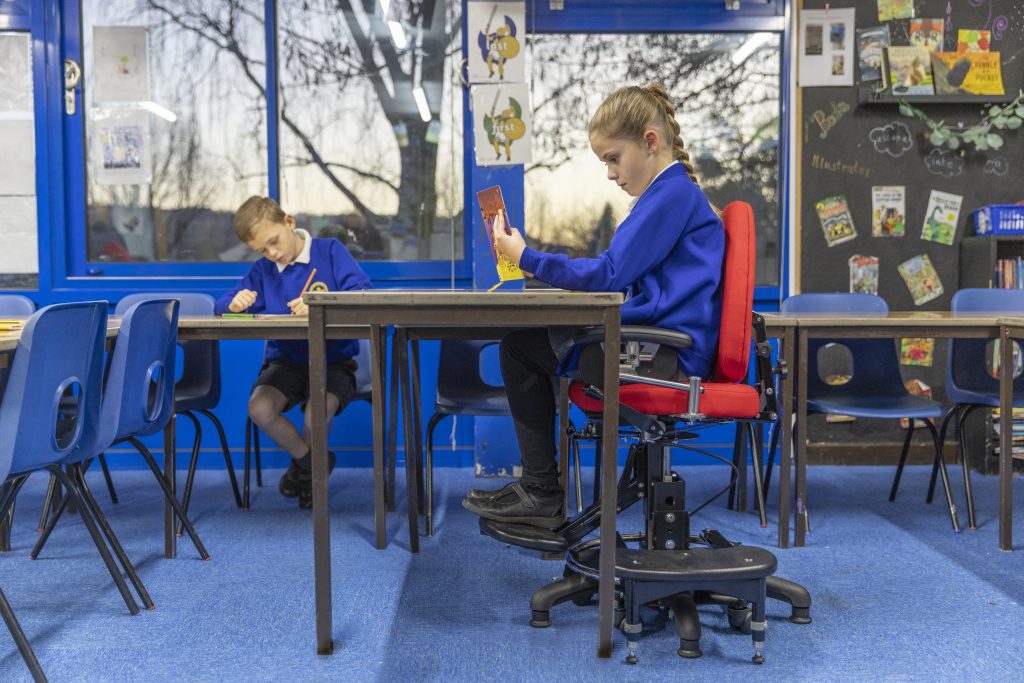
Many pupils struggle with discomfort during long periods of sitting, especially when standard classroom chairs don’t provide the postural support they need. Without adaptive classroom seating that supports alignment, stability, and independent movement, pupils can experience fatigue, reduced concentration, and difficulty staying engaged in lessons. These challenges often go unnoticed, but they have a significant impact on comfort, confidence, and participation throughout the school day.
Adaptive classroom seating is designed to address these issues by offering structured postural support, long‑duration comfort, and easy independent access

User Goal
To sit comfortably and independently throughout the school day with the right postural support.
User Challenge
Standard classroom chairs did not provide the stability or support needed for long periods of sitting, causing discomfort, fatigue, and difficulty concentrating.

Seating Solution
Specialist adaptive seating designed to support posture, stability, and independent access within the classroom.
User Outcome
With supportive adaptive seating, Cara gained improved posture, lasting comfort, and the independence to stay focused and fully participate in lessons.
Understanding the Need for Adaptive Classroom Seating
In many schools, pupils spend hours each day in the same position, relying on standard classroom chairs that simply aren’t designed for long‑term comfort or postural support. For children with postural needs, this can turn an ordinary school day into a cycle of shifting, fidgeting, and fighting discomfort.
For Cara, this was her everyday reality. Sitting for extended periods meant constant position changes, difficulty staying focused, and a level of discomfort that made learning harder than it needed to be. These challenges often go unnoticed by others, but they have a very real impact on the pupils experiencing them. What she needed was a seating solution that offered comfort, independence, and the freedom to participate fully in school life.
The Postural Challenges Pupils Face Without Supportive School Seating
Before finding the right adaptive seating, Cara faced the same barriers many pupils with postural needs encounter in mainstream and SEN environments:
- discomfort during long periods of sitting
- reduced concentration due to poor posture
- limited independence when using standard classroom furniture
- fatigue caused by inadequate support
These issues don’t just affect comfort, they influence confidence, engagement, and the ability to learn. Without specialist seating that supports posture, stability, and movement, pupils can struggle to stay involved in lessons or feel included in their environment.
Cara needed a chair that didn’t just “work” in a classroom, but one that actively supported her body, encouraged independence, and made prolonged sitting manageable and pain‑free.
How Adaptive Seating Improved Cara’s Comfort, Posture, and Independence
When Cara was introduced to Tomcat’s specialist seating, everything changed. Her chair provided the postural support she needed for her back and feet, offered easy independent access, delivered long‑duration comfort, and blended naturally into her school environment. These features transformed how she sat, and how she participated in her day.
From her very first moments using her chair, Cara reported a shift in comfort, confidence, and capability.
“it helps me during school to get through the day. Its comfortable, supportive, and makes siting for long periods a lot easier.”
She also said one thing very confidently and clearly: “I love it”
Experiences like Cara’s are at the heart of Tomcat’s approach to seating. They shape how we design solutions that support posture, independence, and inclusion.
The Impact of Supportive Classroom Seating on Comfort and Participation
Cara’s experience shows just how transformative the right seating can be. With proper postural support, long periods of sitting became pain‑free and manageable, allowing her to stay focused and fully involved in lessons without the constant distraction of discomfort. She gained greater independence as she was able to access, adjust, and use her chair confidently on her own, giving her more control over her school day and reducing the need for assistance. The chair also blended naturally into her classroom environment, supporting inclusion without drawing unwanted attention or creating disruption.
These outcomes reflect exactly what Tomcat seating is designed to achieve, and they continue to guide the development of our wider seating range, including the Soloseat, ensuring pupils with postural needs can experience comfort, participation, and a genuine sense of belonging in their learning environment.