Classroom seating becomes a significant challenge when a child needs extra stability, postural support, or help with independent transfers. Issues such as a chair sliding during sit‑to‑stand, difficulty staying upright with low tone, or a lack of safe seating for a disabled child can make everyday school tasks harder than they should be. Without the right support, children may struggle with handwriting posture, fatigue, poor trunk control, or the physical effort required just to sit down safely.

User Goal
To sit comfortably and independently throughout the school day with the right postural support.
User Challenge
Standard classroom chairs did not provide the stability or support needed for long periods of sitting, causing discomfort, fatigue, and difficulty concentrating.

Seating Solution
Specialist adaptive seating designed to support posture, stability, and independent access within the classroom.
User Out
With supportive adaptive seating, Noah gained improved posture, lasting comfort, and the independence to stay focused and fully participate in lessons.
Understanding the Need for Supportive, Inclusive Classroom Seating
Sitting at school can be uncomfortable, especially when traditional classroom chairs don’t offer the right posture support or the freedom to move independently. For Noah, a primary school pupil, this discomfort shaped much of his school day. He often needed to change position, shift around, or move just to stay comfortable, and this made it harder for him to stay focused and fully involved in lessons. What should have been simple, sitting and learning, became something he had to work around.
The Impact of Poor Postural Support on Comfort, Focus, and Participation
Noah’s challenge wasn’t just about fidgeting or restlessness. His discomfort made long periods of sitting difficult, which affected his concentration and his ability to participate confidently in class. Standard school seating didn’t support his posture or help him stay settled, and the constant need to adjust himself meant he was always managing his body rather than focusing on his learning. He needed a seating solution that would help him feel comfortable, stable, and independent, something that would let him join in with his classmates without discomfort holding him back.
Creating a Comfortable, Inclusive Seating Experience in the Classroom
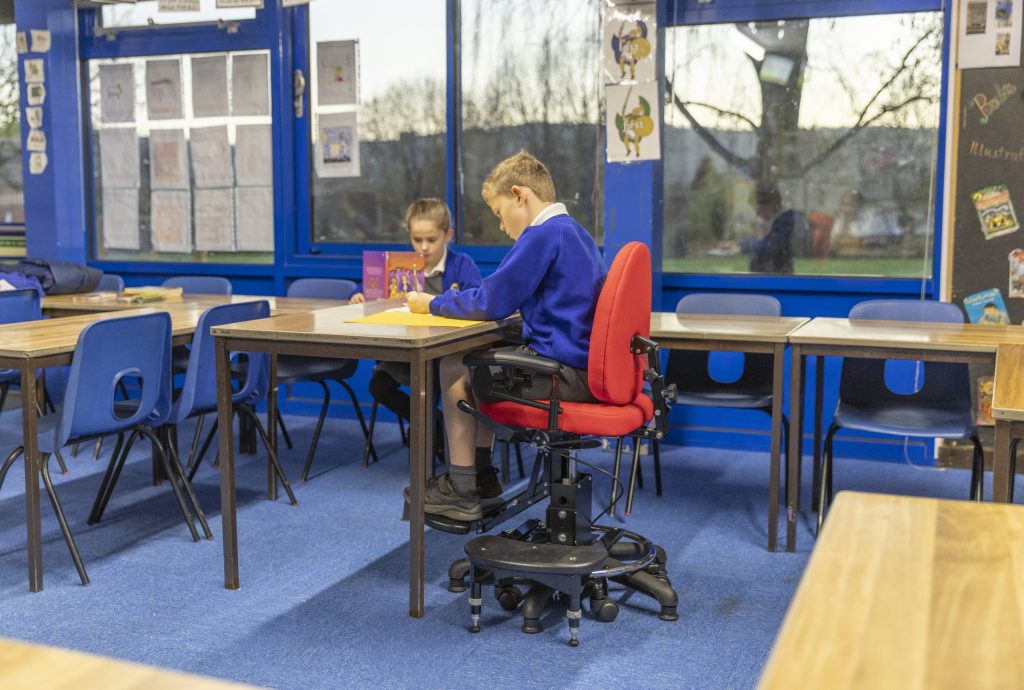
To support Noah’s needs, he was introduced to Tomcat where he was given access to a supportive, accessible chair designed to make sitting easier and more enjoyable. Instead of struggling with a standard classroom chair, he now had seating that helped him feel secure, relaxed, and able to stay in one place for longer without pain or constant shifting. The difference for Noah was about how the chair made him feel.
When we spoke to him about it, Noah told us:
“I feel really happy when I use my Tomcat chair… it gives me more independence, it’s easy to get on and off and I feel cool on it.”
His words captured the heart of what accessible seating can do: it gave him comfort, confidence, and a sense of independence that mattered deeply to him.
How the Right Seating Support Transformed Participation and Confidence
With the right seating support, Noah’s school experience changed in meaningful ways. Sitting for long periods became manageable and pain‑free, allowing him to stay focused on his learning rather than on his discomfort. He became more involved in class, more attentive, and more confident in his ability to participate. His productivity improved simply because he felt better in his body.
Independence was one of the biggest shifts. Noah could get on and off his chair by himself, adjust his position, and move with ease, all without needing help. That independence helped him feel capable and included, and it allowed him to take part in classroom routines just like everyone else. The chair blended naturally into the classroom, supporting him quietly while allowing him to feel comfortable and confident.
For many people, a chair might seem like a simple piece of furniture. But for children who experience discomfort or postural challenges, the right seating can be transformational. Comfort becomes confidence. Support becomes participation. Independence becomes possible.
Noah’s story shows how accessible seating can help children engage, belong, and thrive, and why creating comfortable, inclusive classroom environments matters so much.