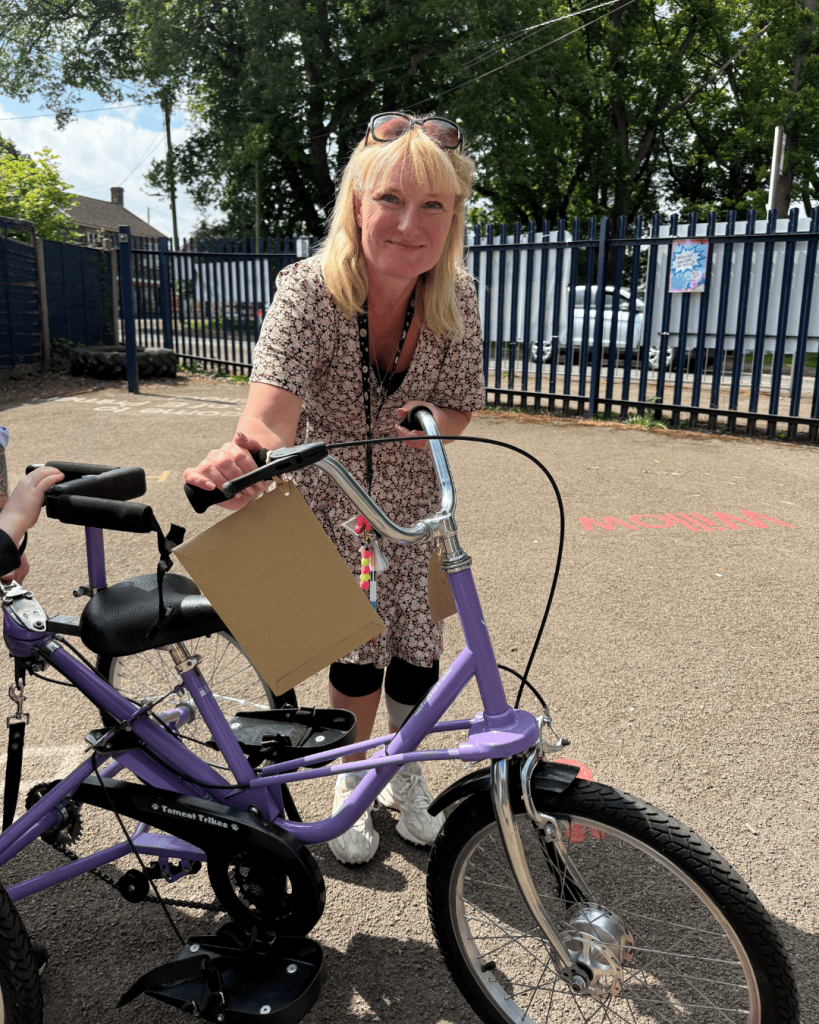
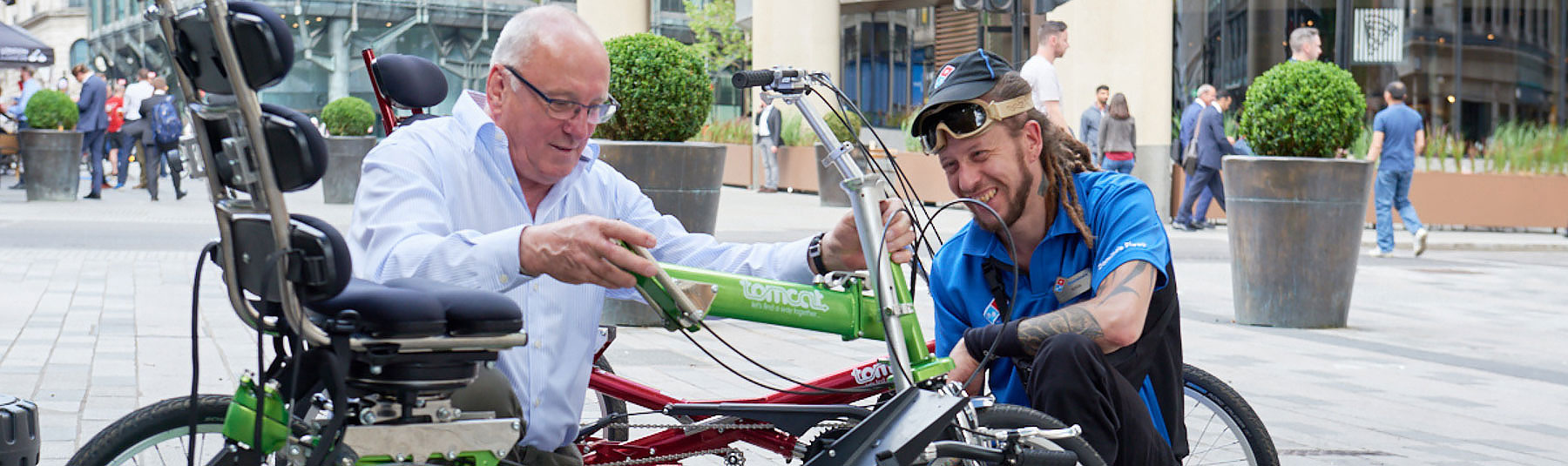
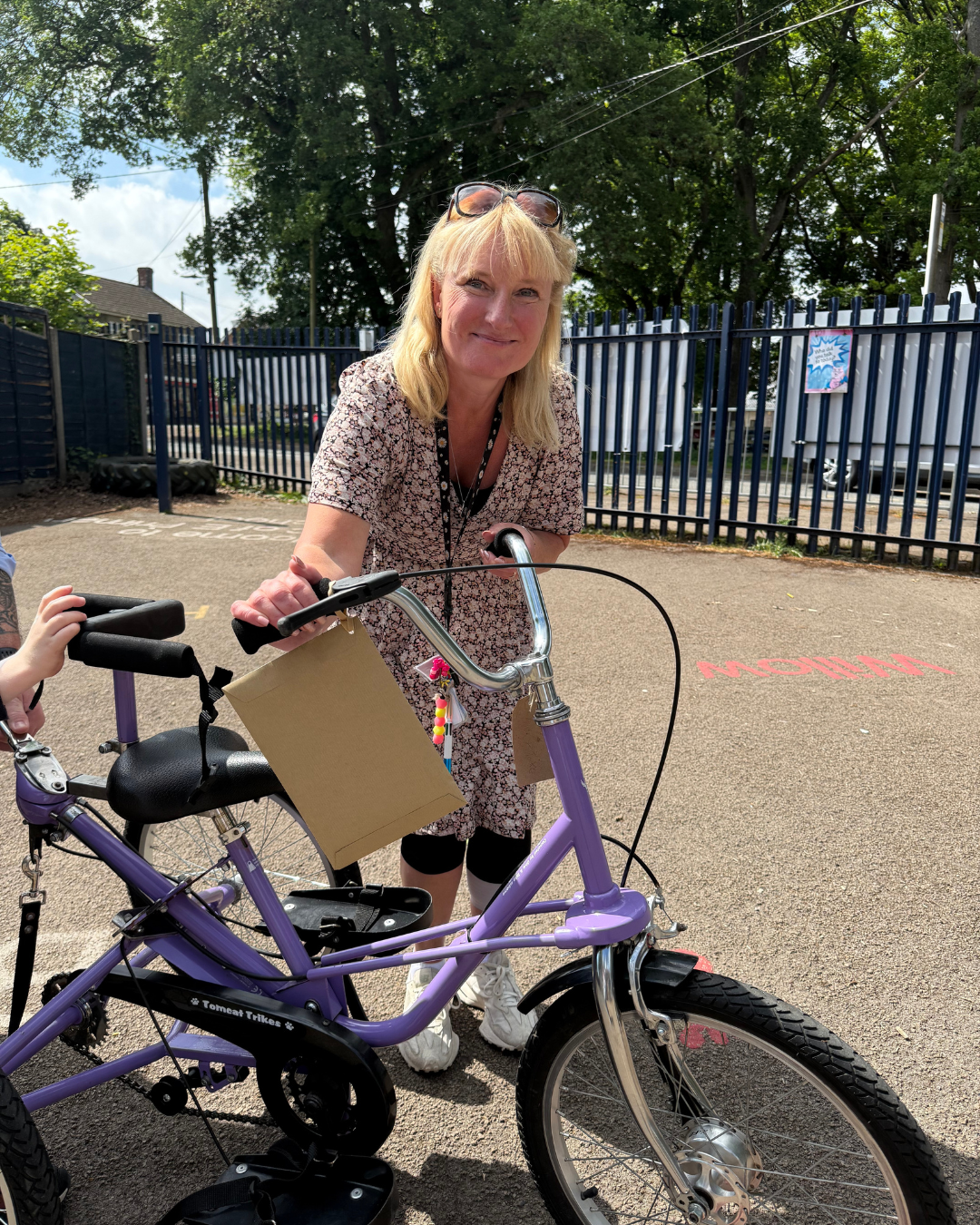
Accessible equipment is becoming essential for schools looking to improve inclusion, support SEND pupils and provide equal access to physical activity. Adaptive trikes are transforming how children with mobility challenges, balance difficulties, or additional needs take part in cycling and outdoor play. When a specialist Tomcat trike arrived at a Forest of Dean primary school, it demonstrated exactly how adaptive cycling equipment can help pupils build confidence, develop independence, and participate fully alongside their peers.
Challenge
Some SEND pupils struggle with mobility, balance, or coordination, making traditional bikes inaccessible.
Goal
To give SEND pupils a safe, inclusive way to join cycling, outdoor play, and movement activities.

Outcome
The adaptive trike increased pupils’ confidence, independence, and participation with their peers.
Trike Used
Why Adaptive Trikes Matter for SEND Pupils
Adaptive trikes play a vital role in helping SEND pupils access the same physical, social, and developmental opportunities as their peers. For many children with mobility challenges, traditional bicycles simply aren’t suitable, which can leave them excluded from active play. Adaptive trikes remove those barriers by providing stable, safe, and fully supported cycling experiences tailored to a child’s individual needs.
For schools, this means pupils who may struggle with independence or physical mobility can take part in inclusive sessions. The benefits go far beyond movement: adaptive trikes help pupils build core strength, develop motor skills, improve spatial awareness, and experience the emotional boost that comes from achieving something new. Most importantly, they enable SEND pupils to join in with friends, strengthening social connection and ensuring no child is left on the sidelines.
A Teacher’s Perspective on the Difference Adaptive Trikes Make
For teachers at Bream C of E Primary School, accessible equipment isn’t a luxury, it’s a vital part of ensuring SEND pupils can participate fully in school life. Staff immediately recognised how the adaptive trike could transform everyday experiences for children who often face barriers to mobility, balance, and coordination.
One teacher explained how the trike supports inclusion during cycling and outdoor activities:
“We hope it will allow all of the children to have better accessibility with cycling. Specifically with C, we hope it gives him more opportunity to join in on our cycling activities and play with his friends.”
The moment the trike arrived was described with genuine excitement and a sense of possibility:
“When we first saw the trike, all we could say was ‘wow’ it’s so amazing. I’m shocked at what he is now able to achieve.”
From a teaching perspective, the impact goes far beyond physical mobility. Adaptive trikes help pupils build confidence, develop independence, and engage more fully with their peers, all of which contribute to a more inclusive and supportive school environment.
As one teacher put it:
“This trike will mean he can now move around and be more involved in play with his friends, and be more independent.”
For the staff at Bream C of E Primary School, these moments are exactly why accessible equipment matters. It enables them to deliver inclusive learning experiences, support individual needs, and ensure every child has the chance to thrive.
Supporting Independence, Mobility, and Social Connection
For pupils with SEND, independence often begins with the ability to move confidently and safely within their school environment. Adaptive trikes play a key role in this, giving children who struggle with balance or coordination a stable way to explore, participate, and take control of their own movement.
The increased mobility doesn’t just support physical development, it has a direct impact on social connection. When pupils can move around more easily, they’re able to join in with group games, interact more naturally with friends, and feel part of the social life of the playground. This shift from observing to actively participating can be transformative for confidence and emotional wellbeing.
Teachers have noted how quickly pupils are engaging with the trike, using it not only as a mobility aid but as a bridge to shared experiences with their peers. These moments of connection are exactly what inclusive equipment is designed to create: opportunities for every child to feel involved, capable, and valued.
A Shared Commitment to Inclusive Participation
The arrival of the adaptive trike at Bream C of E Primary School wasn’t just an exciting moment for pupils: it represented a shared commitment to ensuring every child has access to inclusive, meaningful play. The trike was donated to the school as part of Tomcat’s ongoing mission to support pupils with SEND and provide schools with the accessible equipment they need to remove barriers to participation.
For Tomcat, this donation is more than a gesture. It represents our commitment to breaking down barriers and giving schools the tools they need to support meaningful participation. Adaptive trikes open doors for pupils who may struggle with traditional bikes, allowing them to build confidence, develop independence, and take part in outdoor play alongside their friends.
We’re proud to support schools like Bream C of E Primary School and look forward to seeing how the trike continues to enrich the lives of pupils in the weeks ahead.