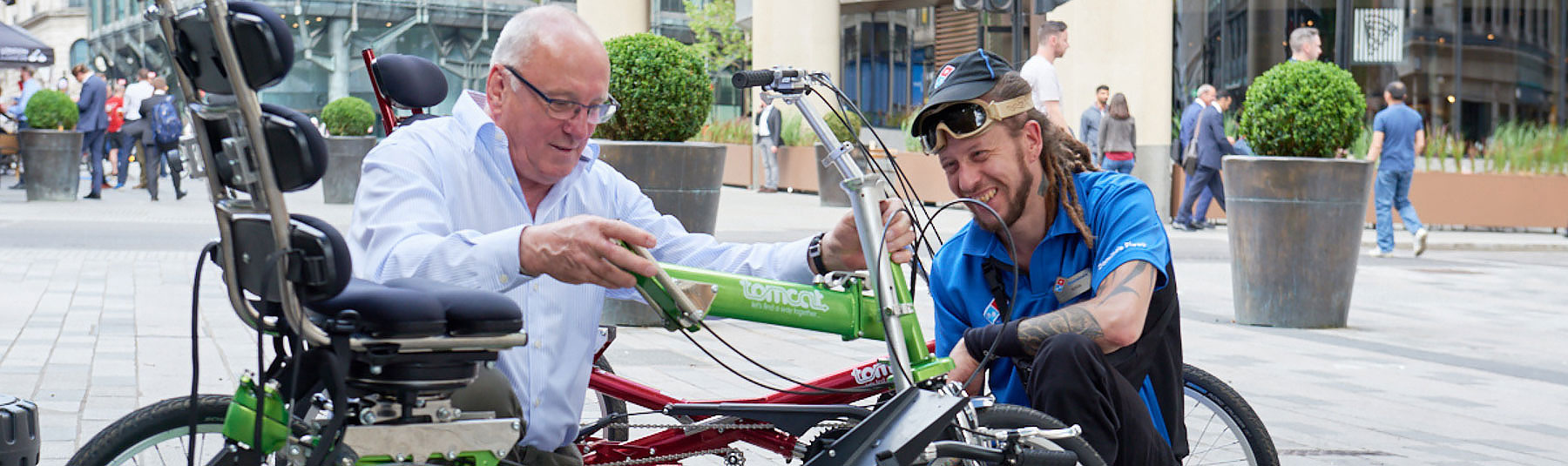
A special needs trike, sometimes called an adaptive tricycle or disability trike, is a purpose-built cycle designed for children who are unable to use a standard bike or tricycle safely. Rather than adapting an existing product, these trikes are engineered specifically to support children with physical disabilities, developmental delays, or conditions affecting balance, coordination, and motor skills.
Unlike the trikes you’d find in a toy shop, a special needs trike is a therapeutic and recreational tool in one. For many children with disabilities, an adaptive bike is a medically relevant device, not just a recreational extra. That distinction matters, and it shapes everything about how these trikes are designed and fitted.
How is it different from a standard trike?
At first glance, some special needs trikes look surprisingly similar to regular ones, which is very much the point. But underneath that familiar shape, there’s a world of difference.
Stability by design. A standard trike gives three wheels for balance, but not much else. Special needs trikes offer greater stability and positioning support than standard bikes, making cycling more accessible for riders with physical disabilities, developmental delays, balance challenges, or coordination needs.
Supportive seating and trunk support. Many children with conditions like cerebral palsy, or spinal differences need more than a saddle. Some trikes feature high-backed seats with chest harnesses, strapping to keep feet on the pedals, and pulley systems on the pedals to prevent the rider’s toes from pointing as they push down.
Carer involvement built in. One of the most practical differences is how these trikes account for the role of a parent or support worker. Features like rear steering handles allow a carer to guide direction and apply braking from behind, giving the child the experience of cycling while keeping them safe. At Tomcat, this is called Carer Control, an innovation that enables a pedestrian carer to control steering, braking and speed from behind the trike as the rider pedals, making it possible for riders with learning or physical difficulties to cycle in complete safety.
Custom fit, not off-the-shelf. Perhaps the biggest difference of all is that a well-made special needs trike is built around your child, not the other way around. Every trike Tomcat make for an individual is custom made in our Gloucestershire factory, according to each child’s specific needs. This approach matters because no two children are the same, and a trike that fits poorly can undermine both safety and enjoyment.
What conditions can a special needs trike support?
Special needs trikes are used across a wide range of diagnoses. Examples of children who may benefit include those with cerebral palsy, developmental delays, muscular dystrophy, traumatic injuries, and other physical or cognitive disabilities. They are also used by children with visual impairments, autism, Down syndrome, epilepsy, and restricted growth conditions.
The right trike for your child will depend on their specific needs, which is why assessments with a specialist are such an important part of the process.
What are the benefits?
Beyond the obvious joy of being able to ride, the benefits of adaptive cycling are well documented.
Riding a tricycle provides both fun and fitness, and is a therapeutic activity that allows children to exercise their lower extremities. As the muscles move through cycling motions, they are flexed, extended and stretched. This range of motion is crucial for children with disabilities, because muscles are incapable of keeping up with bone growth unless fully extended.
There’s also a meaningful social dimension. Trike riding encourages socialisation and the development of friendships, especially when inclusion enables children with special needs to ride alongside their peers.
And then there’s confidence. Being able to ride is a natural confidence builder, and supports the development of self-esteem. For children who spend much of their time adapting to a world that wasn’t built for them, the experience of doing something independently, something that looks just like what everyone else is doing, can be genuinely transformative.
What makes Tomcat different?
We were created out of the desire to help just one little boy experience the joy, normality and freedom of exploring the outdoors on wheels. Our founder Bob Griffin quickly discovered that no other company manufactured trikes of the right design to support physical disabilities. Twenty-five years later, that founding spirit still shapes every trike we make.
Our British-made trikes are built to fit your needs completely, rather than adapting existing products. Our range covers children from as young as 18 months right through to adulthood, with models designed for a huge variety of needs. The Fizz, for example, is a tough, stable, innovative road trike specifically engineered for children with learning or physical disabilities, suitable for young people aged 3 to 16. The Tiger, meanwhile, is designed specifically for young children or those with a restricted growth condition, with a purposefully narrow pedal spacing that provides the perfect leg span for a small pelvis, promoting natural, geometric support for hips, legs and knees.
Every purchase begins with a personal assessment, so that the trike your child receives is one that genuinely works for them.
Could a special needs trike be right for your child?
If your child has a disability or condition that makes standard cycling difficult or unsafe, a special needs trike could open up something they might otherwise miss out on entirely. Whether it becomes a tool in their physiotherapy, a way to join the family on weekend rides, or simply a source of outdoor joy, the impact can reach well beyond the hours spent in the saddle.
To find out whether a Tomcat trike might be the right fit for your child, you can request a free assessment with one of our nationwide specialists.