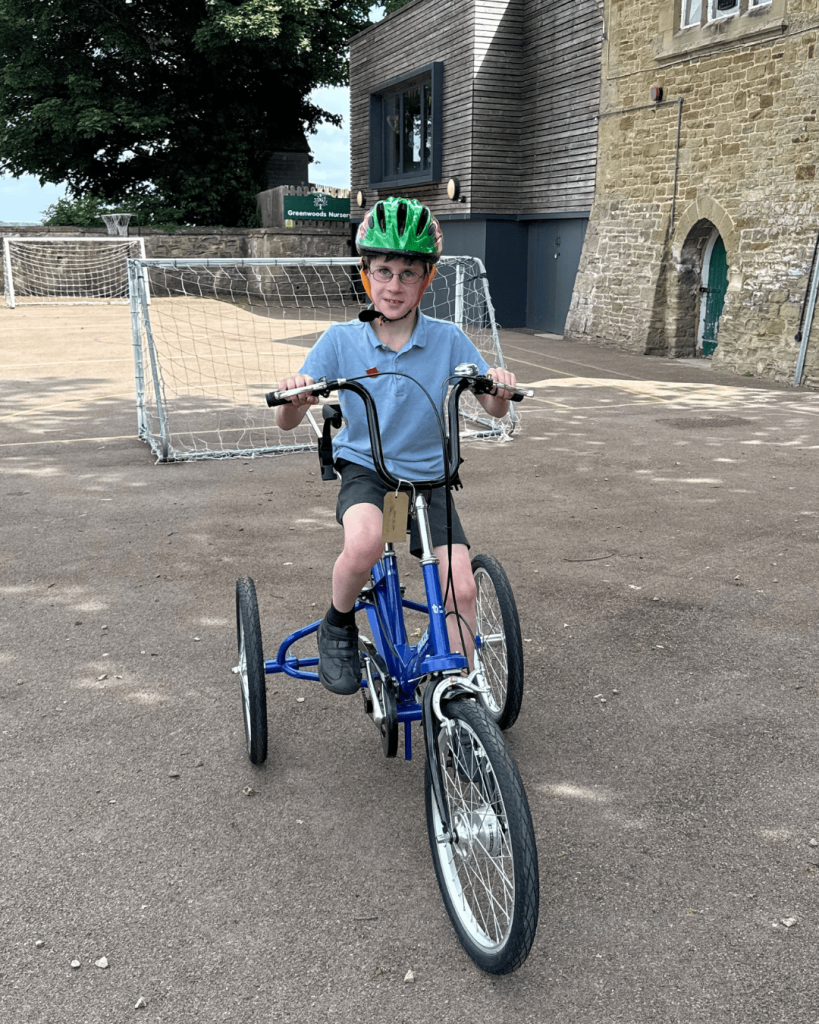
Many children find pedalling a bike forward difficult, and it is far more common than people realise. Sometimes it is due to strength, coordination, confidence, or simply the weight of the bike. For Roary, a pupil at English Bicknor C of E School, pedalling had always been a challenge. He could place his feet on the pedals but pushing them all the way around was something he had never been able to do.
That changed when a Tomcat adapted trike arrived at his school.

Rider Challenge
Roary could place his feet on the pedals but couldn’t push them through a full rotation.
Rider Goal
To pedal forward independently for the first time.

Trike Used
Rider Outcome
With a Tomcat trike, Roary pedalled forward independently and gained new confidence.
Why Some Children Can’t Pedal a Bike Forward
Before using a Tomcat, Roary could place his feet on the pedals, but he could not generate enough force to push them through a full rotation. This is a common challenge for children with mobility, coordination, or strength differences. Many children struggle to pedal forward because the bike is too heavy, the gearing is too stiff, or they lack the momentum needed to move through the “dead zone” of the pedal cycle. Traditional bikes and heavier trikes often require more effort than a child can comfortably produce, which leads to frustration and a belief that cycling “just isn’t possible”.
In many cases the issue is mechanical rather than developmental. If the bike is working against the child, no amount of encouragement will help them push the pedals around.
Roary’s mum described how significant this barrier had been:
“He’s always struggled to ride a bike. He’s never been able to pedal forward. He’s only been able to place his feet on the pedals and not propel himself. But with the Tomcat, he’s able to fully pedal himself.”
For families searching for solutions, Roary’s experience shows that the issue is often the equipment, not the child. When the bike is designed to support their abilities, children can discover success far more quickly than expected.
How the Right Adapted Trike Can Help a Child Pedal for the First Time
Roary first showed interest in cycling during a visit to Newent School, where he tried several adapted tricycles. This was the first time he had the chance to explore bikes designed specifically for children who need extra support with balance, coordination, or pedalling. When he sat on the Tomcat Fizz, something clicked. The lightweight frame and smooth pedalling action allowed him to push the pedals forward for the first time in his life.
This moment is incredibly common for children using a Tomcat for the first time. Once the weight and resistance barriers are removed, children often surprise themselves with what they can do.
His mum was shocked and overjoyed:
“Mum is so happy and just shocked that he is able to ride a bike because before now he hasn’t been able to cycle.”
For many families, this is the turning point – the moment they realise their child can pedal, they just needed the right trike to unlock that ability.
Why Lightweight Engineering Makes Pedalling Easier for Children
Bob Griffin, Tomcat’s Managing Director and Head of Engineering and Design, explained the design thinking behind this breakthrough:
“We put an awful lot of importance on reducing weight so that the first push can create speed and momentum that works like a flywheel to pull the trike through the 5 o’clock to 7 o’clock dead zone. A Tomcat has a success rate in the high 90%’s. So, we know from years of experience that most children will excel on a Tomcat where they may not do so well or fail entirely on a heavier machine.”
This lightweight engineering is not just a feature; it is the foundation of why Tomcat trikes work so well for children who struggle to pedal. By reducing resistance and improving momentum, the trike helps children move through the hardest part of the pedalling cycle. This gives them a sense of success early on, which builds confidence and encourages them to keep going.
For many children, this is the first time cycling feels achievable rather than overwhelming.
How Schools Use Adapted Trikes to Build Strength and Confidence
At school, Roary takes part in short activity sessions to help with focus and wellbeing. The trike fits perfectly into these movement breaks, giving him a chance to regulate, move his body, and build strength in a way that feels fun rather than forced.
Mrs Lawson, who works closely with him, shared:
“Hopefully the trike will give Roary more confidence and help with his mobility. Hopefully it will help him get stronger so that in the future he can go bike riding with his family.”
She added:
“We have breakout times in between lessons where Roary has what we call a brain break, where he gets the chance to do a bit of physical activity, so the trike will be perfect for that.”
For schools supporting children with mobility challenges, adapted trikes offer a simple, joyful way to support physical development. They help children build leg strength, improve coordination, and experience success in a physical activity. This sense of inclusion can have a powerful impact on confidence and wellbeing.
For schools supporting children with mobility challenges, this shows how adapted trikes can build strength, confidence, and independence.
A Positive Step Toward Independent Cycling
With the Tomcat trike now part of his daily routine, Roary is discovering a new sense of freedom. For a child who once believed he could not pedal, the ability to ride independently is life changing. It opens the door to family bike rides, outdoor play, and a growing sense of independence.
For families and schools wondering what to do when a child can’t pedal a bike forward, Roary’s story shows that the right equipment can make all the difference. With the right support, many children discover that cycling is not only possible but enjoyable.