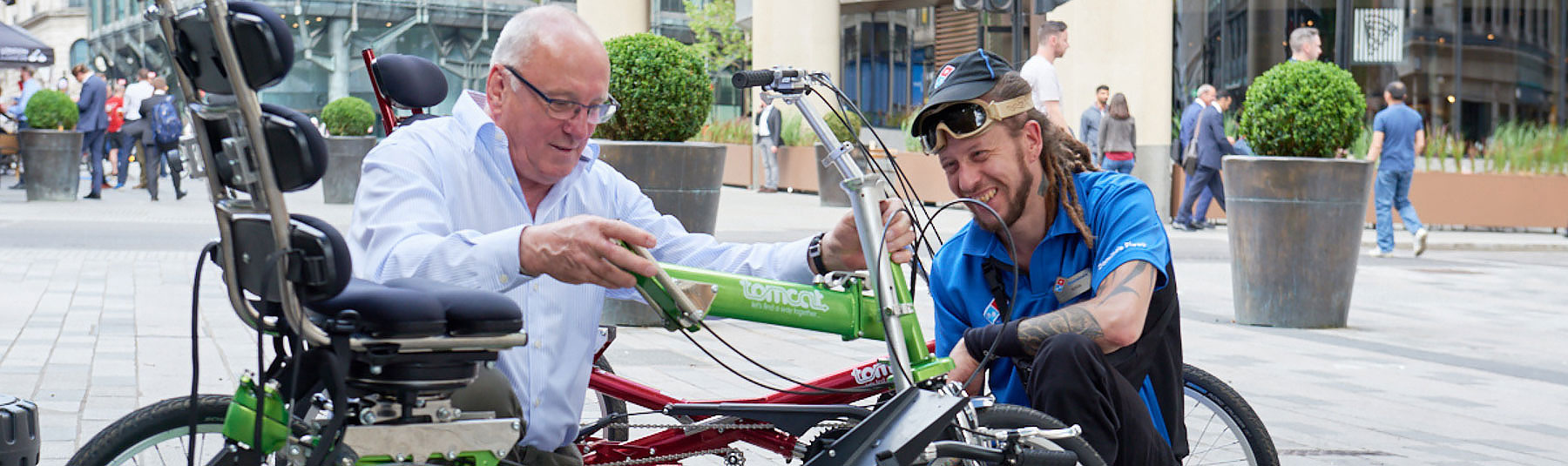
Inclusive cycling is becoming an increasingly important part of Cornwall’s commitment to improving physical activity, wellbeing, and outdoor access for children with disabilities and mobility conditions. Across the county, families and community groups are seeking adaptive bikes, accessible cycling sessions, and specialist mobility equipment that allow every child to experience the freedom, confidence, and independence that cycling can offer. One organisation at the heart of this movement is the Cornwall Bicycle Project, a community‑driven cycling centre that provides inclusive cycling opportunities for children and young people who may not be able to ride a standard two‑wheeled bike.
To support this growing need, Tomcat partnered with the Cornwall Bicycle Project through our Give and Take Scheme, a programme that refurbishes pre‑loved Tomcat trikes and donates them to inclusive cycling centres and charities across the UK. By placing high‑quality adaptive equipment into community settings, the scheme helps expand access to inclusive sport, SEND‑friendly cycling, and early mobility development for children who benefit from additional support.

Cycle Centre
Purpose of the Centre
To give people of all ages and abilities a safe, supportive place to enjoy cycling and build confidence.

The Growing Demand for Inclusive Cycling Opportunities in Cornwall
Cornwall has become one of the UK’s most active regions for community cycling, outdoor wellbeing programmes, and inclusive sport. With its network of trails, traffic‑free routes, and community‑led cycling hubs, the county offers a growing number of opportunities for children with disabilities or mobility conditions to enjoy safe, supported, and confidence‑building cycling experiences. Local authorities, charities, and grassroots organisations have increasingly recognised the importance of accessible physical activity, particularly for children who benefit from structured, adaptive, or sensory‑friendly environments.
Inclusive cycling plays a vital role in this landscape. It provides children with opportunities to develop motor skills, build confidence, and experience independence in a way that feels safe and enjoyable. Many families in Cornwall rely on community cycling centres to access adaptive bikes and specialist support. This makes inclusive cycling hubs an essential part of Cornwall’s wider commitment to health, wellbeing, and SEND‑friendly activity.
Across the county, demand for adaptive bikes and inclusive cycling sessions continues to grow. More families are seeking accessible routes, more community groups are offering inclusive programmes, and more children are discovering that cycling can be a realistic and enjoyable part of their lives. This shift reflects a broader movement toward creating environments where every child, regardless of ability, can participate in outdoor activity and experience the joy of movement.
Inside the Cornwall Bicycle Project, A Community Hub for Inclusive Cycling
The Cornwall Bicycle Project is widely recognised as a valued community cycling organisation in Par, offering children and young people a safe and welcoming space to explore cycling in a way that suits their individual needs. Their weekly inclusive cycling sessions take place on a local running track, and they provide an environment where children with physical, learning, or coordination challenges can ride with confidence and support. The project aims to reduce barriers to participation, and they offer access to adaptive bikes that help children experience the joy of movement in a way that feels achievable and empowering.
The project is led by Founder and Director Emma Roberts, who has spent more than a decade championing accessible cycling across Cornwall. Emma is a British Cycling Coach, a Ride Leader, and an experienced instructor in school cycling programmes, BikeAbility, BalanceAbility, and mountain biking. Her work has helped many children discover cycling for the first time, and her commitment to inclusion is central to the project’s mission.
As Emma explains, “Inclusive cycling is about giving every child the chance to ride. Some children need a different type of support or a different type of bike, and that is exactly what we aim to provide.”
The Cornwall Bicycle Project has become an important resource for families seeking accessible cycling opportunities. Their sessions offer a supportive space where progress is encouraged and every achievement is celebrated. For many children who may not be able to access mainstream cycling clubs, the project provides an alternative route into cycling that feels safe, positive, and genuinely inclusive.
How Adaptive Trikes Support Confidence, Coordination, and Independence
Adaptive trikes play an important role in making cycling accessible for children with disabilities or mobility conditions. Many children who struggle with balance, coordination, muscle strength, or sensory processing find traditional two‑wheeled bikes difficult to manage. Adaptive trikes offer a stable and supportive alternative, which can help children experience the physical and emotional benefits of cycling in a way that feels safe and achievable.
Cycling on an adaptive trike can support a wide range of developmental goals. It can help children build strength, improve motor planning, develop coordination, and gain a sense of independence that may be harder to achieve through other forms of physical activity. For many families, adaptive cycling also provides a rare opportunity for shared outdoor experiences, which can strengthen confidence and create positive associations with movement and exercise.
Community cycling centres across Cornwall rely on adaptive trikes to make their sessions inclusive. These trikes allow children to participate at their own pace, and they give instructors the flexibility to tailor support to each child’s needs.
As Emma Roberts explains, “When a child has the right equipment, everything changes. You can see their confidence grow within minutes, and that is what makes inclusive cycling so powerful.”
Tomcat has been designing adaptive trikes for more than twenty five years, and many centres choose Tomcat equipment because of its adjustability, stability, and long‑term durability. Trikes like the Tomcat Fizz are often used in inclusive cycling settings because they can be tailored to a child’s size, ability, and support requirements. This makes them a practical choice for community programmes that work with a wide range of children.
Adaptive trikes are more than mobility equipment. They are tools that open doors to participation, confidence, and independence. When placed in the right environment, they can transform a child’s relationship with movement and help them experience the joy of cycling in a way that feels truly accessible.
How Refurbished Tomcat Trikes Support Community Cycling Projects
Tomcat’s Give and Take Scheme was created to make adaptive cycling more accessible for families, schools, and community organisations. The scheme allows families to return their pre‑loved Tomcat trikes once they are no longer needed. Each trike is then fully serviced, refurbished, and prepared for a new home, where it can continue to support children who benefit from adaptive cycling.
The Give and Take Scheme is designed to extend the life of high‑quality mobility equipment and to place it in settings where it can have the greatest impact. Many community cycling centres rely on donated or refurbished trikes to expand their inclusive sessions, and the scheme offers a practical way to increase access to adaptive bikes without the cost of purchasing new equipment. It also supports sustainability by ensuring that well‑built trikes remain in use for many years.
For organisations like the Cornwall Bicycle Project, receiving a refurbished Tomcat trike can make a meaningful difference to the number of children they are able to support.
Emma Roberts shared her thoughts on the donation, saying, “Having this Tomcat trike donated to us means an increase in our fleet of smaller trikes, because that is where we do not have so many. We have local primary schools that now come and access the trikes, so this trike will be used a lot by them. It is fantastic.”
Emma also highlighted why Tomcat equipment is valued in inclusive cycling settings. “We love Tomcat trikes. The design is amazing, but one thing that stands out is your customer service. It is really fantastic, and the best customer service out of all the other brands.”
A Powerful First Ride, The Transformative Impact of Inclusive Cycling
Inclusive cycling often creates moments that stay with families, instructors, and volunteers long after a session ends. One of the most memorable examples came shortly after the Cornwall Bicycle Project received their refurbished Tomcat Fizz. During a weekly inclusive cycling session, a young rider who had never been able to cycle independently before tried the trike for the first time. What happened next captured the true purpose of adaptive cycling.
Emma Roberts described the moment with pride. “Today, we have a child who has never ridden a bike before, cannot ride a bike, and has got on a Tomcat and is pedalling around independently, smiling, the lot.” For the child, this was a breakthrough. For the team, it was a reminder of why inclusive cycling matters so deeply.
For the Cornwall Bicycle Project, these moments represent the heart of their work. Each child progresses at their own pace, and every milestone is celebrated. The addition of the Tomcat Fizz has helped create more opportunities for children to experience these firsts, and it continues to play a meaningful role in the project’s inclusive sessions